

Cancer treatment asks a lot from the body — physically, mentally, and emotionally. One of the most frustrating side effects many patients share with me is when food suddenly stops tasting good.
Favorite meals may taste bland, bitter, metallic, or just “wrong.” For some, everything seems to have no flavor at all.
If you’ve found yourself saying, “I know I need to eat, but nothing tastes good,” you’re not alone. This experience is extremely common during chemotherapy and radiation. And while it can feel discouraging, there are ways to work around it.
With some creative adjustments, you can keep your body nourished and even find small moments of enjoyment in eating again.
This guide will help you understand why taste changes happen, what nutrients matter most during treatment, and how to bring variety, nutrition, and pleasure back to your meals.
Why Food Loses Its Flavor During Cancer Treatment
When nothing tastes good, it can feel like your appetite has been stolen from you. But knowing why this happens can help reduce the stress around it. Taste changes are usually temporary and are caused by several overlapping factors:
- Chemotherapy and radiation can damage taste buds directly, making food seem flat, overly bitter, or metallic.
- Medications may alter saliva production, leaving your mouth dry or changing how flavors register.
- Nutrient imbalances (like zinc or iron) can affect taste perception.
Mouth sores or oral sensitivity can make acidic or spicy foods painful, leading to food avoidance. - Stress and fatigue often reduce appetite and enjoyment of meals, further complicating things.
Understanding that this is a physical and treatment-related side effect—not something you’re doing wrong—can be a relief. And while you may not have control over the changes themselves, you do have tools to make eating easier and more satisfying.
When Taste Fades, Engage Your Other Senses

Eating is a multi-sensory experience. Even if taste is muted, you can use sight, smell, texture, and sound to make meals more enjoyable. Think of it like adding color to a black-and-white picture.
Sight:
Bright, colorful foods (like berries, greens, and golden spices) stimulate appetite just by being visually appealing. Try arranging meals on vibrant plates or garnishing with fresh herbs.
Smell:
Aroma is powerful. Fragrant herbs like basil, rosemary, or cilantro, or warming spices like cinnamon and ginger can make food more inviting, even if flavor is dull.
Texture:
A mix of textures—smooth yogurt, crunchy veggies, creamy avocado—can keep eating interesting and enjoyable.
Sound & Social:
Eating with a loved one, or even listening to soft background music, can shift eating from a chore into a small act of comfort.
Sometimes, how food is presented makes all the difference. A smoothie in a chilled glass with a colorful straw or a warm soup in a favorite bowl can be more inviting than the same food served plainly.
Nutrients That Matter Most When Nothing Tastes Good
Even when taste is unreliable, your body needs nourishment to maintain strength, energy, and resilience. Instead of focusing on eating “big meals,” think about weaving in three essential nutrients every day:
1. Fiber for Digestive Support
Digestive changes—constipation, bloating, or irregularity—are common during treatment. Fiber helps regulate digestion, supports detoxification, and feeds healthy gut bacteria, which may even influence how your immune system functions.
Try:
- Berries (blueberries, strawberries, raspberries)
- Apples (green apples add a tart kick some people find refreshing)
Oats, chia seeds, flax seeds
2. Healthy Fats for Energy and Satiety
Cancer and its treatments can sometimes lead to unintended weight loss. Healthy fats are calorie-dense, meaning you get more fuel in smaller bites, and they keep you feeling full longer. They also support hormone health, brain function, and muscle repair.
Try:
- Avocado
- Nuts (almonds, cashews, walnuts) or nut butters
- Seeds (chia, flax, sunflower)
- Olive oil, avocado oil, coconut oil, or MCT oil
3. Protein for Strength and Healing
Protein is essential for rebuilding tissues, maintaining lean muscle, and supporting your immune system. Without enough, fatigue can worsen, and your body may take longer to recover between treatments.
Try:
- Beans and lentils
- Nut butters or seed butters
- Collagen peptides or protein powders (pea, rice, hemp, whey)
- Yogurt (dairy or plant-based)
Even if you can’t manage large portions, small, protein-rich snacks can make a difference over the course of a day.
Smoothies & Juicing: When You Need Flavor and Nutrition in One Sip
When chewing feels exhausting, or when every food tastes bland, smoothies and juices can be lifesavers. They’re easy to prepare, gentle on digestion, and allow you to pack in nutrition without overwhelming your taste buds.
Smoothies
Smoothies are especially versatile—you can combine fruits, vegetables, nut butters, seeds, oils, and protein powder into a meal you can sip slowly. If smells bother you, try drinking through a covered cup or straw to minimize aromas.
Ideas to try (get full recipes at the end of this article!):
- Almond Oatmeal Smoothie: almond butter, oats, apple, blueberries, and oat milk.
- Strawberry Oat Smoothie: rolled oats, banana, strawberries, protein powder, and soy milk.
- Tropical Smoothie: mango, papaya, coconut yogurt, lime juice, and cashews.
- Banana Nut Smoothie: banana, berries, nut butters, chia seeds, oats, and cinnamon.
- Keto Mint Smoothie: avocado, coconut milk, mint, cacao, and MCT oil.
Juices
Fresh juices can be more stimulating to the taste buds, especially with bold flavors like ginger, lemon, or cayenne. These ingredients can “wake up” your palate when everything else seems flat.
For a nutrient-dense juice base, try spinach, carrots, cabbage, broccoli, parsley, or oregano — and mix in a small piece of fruit for sweetness. (Just avoid acidic ingredients like lemon or orange if you have mouth sores.)
Soups: Gentle, Nourishing, and Flavorful
Soups are a classic comfort food—and for good reason. They’re warm, soothing, and easy to modify based on your needs. For example, you can keep flavors mild if your mouth is sensitive, or you can add spices and herbs if you find bold flavors more enjoyable.
- Use ginger, garlic, soy sauce, or fresh herbs for flavor.
- Add extra sesame oil or olive oil for calories.
- Stir in tofu, beans, or whisked eggs for protein.
Try: Ginger Soy Mushroom Soup – recipe provided at the end of this article.
Soups also reheat well, making them perfect for days when cooking feels like too much effort.
Practical Tips for Making Eating Easier

Sometimes the small adjustments make the biggest difference. If you’re struggling with taste or appetite, try experimenting with these:
- Drink fluids regularly to combat dry mouth and dehydration.
- Practice good oral hygiene — brushing, rinsing, or baking soda rinses can improve taste.
- Experiment with spices — cinnamon, turmeric, ginger, mint, or even a dash of cayenne may cut through blandness.
- Avoid what hurts — acidic foods (citrus, tomatoes) may irritate mouth sores.
- Choose organic produce when possible — use the Dirty Dozen and Clean Fifteen lists to prioritize.
- Talk to your care team if taste changes linger — they may suggest zinc, B-complex, or other supports.
Remember, there’s no single “right” way to eat during treatment. The goal is not perfection—it’s simply finding what works for you in this moment.
Additional Resources
- Cook for Your Life – a recipe database designed for cancer patients.
- VA Oncology Cookbook – practical recipes and tips.
- PCC Recipe Database
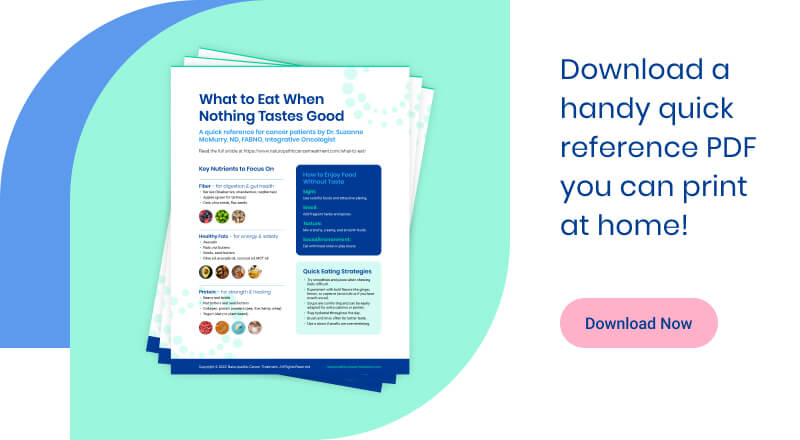
And download the quick reference guide for this article to print at home or just keep handy!
What’s Next
If you’re going through treatment and food has lost its joy, know this: you are not failing your body. These changes are not your fault, and they are temporary. With small, creative shifts—whether it’s trying a new smoothie, adding herbs to a soup, or simply serving food in a way that looks beautiful—you can make eating more manageable and nourishing.
Every bite, no matter how small, supports your healing. And you don’t have to figure this out alone. If you’d like more personalized guidance, reach out to a naturopathic oncology specialist who understands both the science of nutrition and the emotional side of eating during treatment.
Recipes to Try When Nothing Tastes Good
Sometimes the hardest part of eating during treatment is figuring out what to make. To help, here are some simple, nutrient-packed recipes you can try at home. They’re easy to modify based on what tastes best to you.
Breakfast Smoothies

Almond Oatmeal Breakfast Smoothie
- 2 Tbsp almond butter
- ¼ cup cooked oatmeal
- ½ medium green apple
- ½ cup frozen blueberries
- Unsweetened oat milk (to desired thickness)
- (Optional) ½ banana for added sweetness
- (Optional) organic cacao powder or cacao nibs and powdered stevia to taste
Blend all ingredients until smooth.
Strawberry Oat Breakfast Smoothie
- 1 cup unsweetened soy milk or rice milk
- ½ cup rolled oats
- 1 frozen banana, broken into chunks
- 12 strawberries
- ½ tsp vanilla extract
- ¼ tsp stevia or monk fruit
- 4 Tbsp protein powder (optional)
Blend and enjoy!
Tropical Smoothie (Serves 4)
- 2 cups plain plant-based yogurt (coconut or soy)
- 1 mango, peeled and chopped
- 1 papaya, peeled, seeded, and chopped
- 2 Tbsp fresh lime juice + lime slices for garnish
- ¼ cup raw cashews
- ¼ tsp almond extract
- 1 cup ice cubes (plus more as desired)
Blend all ingredients until smooth. Add more ice cubes to thin if needed. Garnish with lime slices.
Per serving: 185 calories, 12g protein, 10g fat, 230mg calcium
Banana Nut Smoothie
- ½ banana
- ½ cup frozen mixed berries
- 1 cup unsweetened almond milk
- 1 Tbsp peanut butter
- 1 Tbsp chia seeds
- 1 Tbsp ground oats
- 1 handful walnut pieces
- 1 handful raw cashews
- Dash of cinnamon
- 4 ice cubes
Blend and enjoy!
(Makes ~2 cups, 1 serving)
Keto Mint Smoothie
- 1 cup unsweetened almond or cashew milk
- ¼ cup coconut milk
- ½ medium avocado
- 1 Tbsp cacao powder
- ½ handful mint leaves
- 1 Tbsp MCT oil
- 1 handful ice cubes
- 5 drops liquid stevia (optional)
- (Optional) ¼ cup protein or collagen powder
Blend until creamy.
Soup Recipe

Ginger Soy Mushroom Soup (Makes ~5 ¾ cups)
- 2 Tbsp sesame oil
- 1 Tbsp fresh ginger, grated
- 2 cloves garlic, finely chopped
- 2 cups mushrooms, sliced
- 4 cups low-salt vegetable broth
- 1 medium carrot, peeled and thinly sliced
- 2 Tbsp soy sauce
- 1 cup snow peas
- 1 package (350 g) firm or extra-firm tofu, cubed
- 1 green onion, thinly sliced
Directions:
- In a large pot, cook ginger, garlic, and mushrooms in sesame oil over medium heat until soft (about 5 minutes).
- Add broth and carrots. Bring to a boil.
- Reduce heat and simmer uncovered for 15 minutes.
- Stir in soy sauce, snow peas, and tofu. Cook until peas are bright green and tofu is warmed through (about 2 minutes).
- Stir in green onion and serve.
Tips:
- For mouth sores: skip the ginger.
- For more calories: add extra sesame oil.
- For more protein: whisk 4 eggs in a small bowl and slowly stir them into the simmering soup at the end of cooking until cooked through.
These recipes are just a starting point. The beauty is that you can adapt them—add a little extra oil for calories, swap fruits for variety, or change textures depending on what feels best to you.